On my drive to work yesterday I realized that, while I’ve mentioned them on these “esteemed” pages before, I’ve never actually written about Clutch, and that’s dumb, because they’ve been one of my favorite bands for almost 30 years now. I’ve written extensively about Iron Maiden, Testament, Helmet, Metallica, Anthrax, and especially Voivod, mostly on my old blog, but for some reason I just haven’t bothered to sit down and write anything substantial about one of the most consistent (and consistently excellent) bands making rock ‘n’ roll music today. I’m here today to remedy that.
If you’ve read much of anything I’ve written here (or anywhere, really), you know that I can be quite long-winded when I get worked up about something (especially if I’m not being looked at while I go on about it), and if you think I don’t get worked up talkin about Clutch, then you’re fixin to learn a thing or two about me. In the spirit of making this more easily digestible, I’m gonna break it up into parts. I flew pretty close to the sun when I posted my guide on how to maximize your good times at Louder Than Life, and if you made it all the way through that sprawling beast, I salute you. I know attention spans are at an all-time low, and it was risky to post something that takes a full 30 minutes to read, but that piece needed to be its own thing.

This thing can certainly be broken into parts. I figure there’ll be three of them. It could be more, and it’s also entirely possible that this’ll be the one and only installment, because sometimes not finishing things is what I do.
Like many of the bands and artists I got into in the mid-to-late 90’s, I first heard Clutch via my homeboy Travis. I grew up in a housing addition in a rural area (I called it the “ruburbs”, since it was like a suburb, but rural, and because I’m very clever) less than 200 yards from the county line, and cable TV wasn’t available there (I’m pretty sure it still isn’t, nor, as recently as late 2021 was any semblance of road treatment during a snow or ice event). It was pretty annoying for me as a kid, but I realize now that even if the cable company had put in the time and expense to bring their services to a small enclave of houses 20 miles from the nearest “city” (Bedford, population: less than 15,000), my parents most certainly wouldn’t have been willing to pay for it, and I couldn’t fault them for that even if I wanted to. We watched 60 Minutes and Hunter and Roseanne and Hoosier Millionaire for free, goddamnit, and we either liked it, or we lumped it.
This was also a few years before PrimeStar and DirecTV became available in my neighborhood. If you lived in the neighborhood of Airy Hills just north of Springville, Indiana in the early-to-mid 1990’s and wanted to watch anything other than the few channels you could pick up with an antenna, the only option was one of those big, old school C-band satellite dishes. Quick side note: it seems as though back in 1970, someone thought “Airy Hills” was a good name for a brand new, developing neighborhood, and no one bothered to tell them they were wrong, and so I grew up in a place called “Airy Hills”.
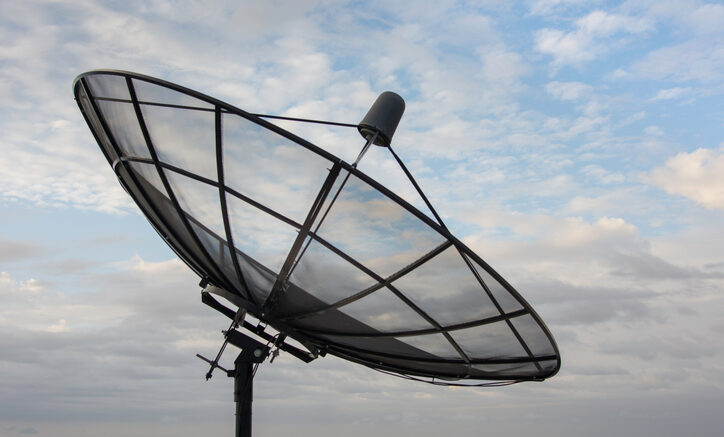
Anyway, Travis lived up the road, and his parents had one of those C-band satellite dishes (which I just learned today was the name of those dishes), and one of the cool things he had access to was MuchMusic. At the time, the channel was more or less Canadian MTV, and like its American counterpart, it has since moved away from music programming (the name was changed to “Much” in 2013 to reflect this). The intersection of time when MuchMusic played music and Travis’s parents had their satellite dish also happened to contain the years 1991-1995, which is when the channel aired a show called Power 30. If MuchMusic was Canadian MTV, Power 30 was Canadian Headbanger’s Ball, although as the name suggests, Power 30 was only 30 minutes per episode, whereas HBB ran a full 3 hours at that point in time. Americans always have to do things bigger, eh?
Anyway, Travis taped two episodes of Power 30, and one summer day between high school and my first ill-conceived attempt at college, we watched that tape together. He was particularly excited for me to see the episode featuring some band called Clutch, as he figured it would be right up my alley, and as usual, he was correct. Travis has a near perfect record when it comes to music recommendations and me.
The episode kicked off with the video for a song called “A Shogun Named Marcus”, and less than halfway through its sub-three-minute run-time, I was hooked.
That fateful 30 minutes also included some live footage of the band and an interview clip, and the live footage was intense and the interview was funny, and I was already well on my way to adding a new favorite to my “all-timers” list. The next payday after watching that video, Travis and I went CD shopping, and I managed to score a used copy of their self-titled second album, which had been released no more than three months prior. (Thinking about that now, it occurs to me that someone probably bought it after seeing “A Shogun Named Marcus” on Beavis and Butthead, and found themselves less interested in the direction the band was taking. Whatever caused them to sell it, I’m still reaping all the benefits.)
But I’m getting ahead of myself. Plus I don’t wanna get too much into my personal Clutch-related narrative yet, because I have to go grocery shopping before the price of everything goes up in a few days, so I’ll just knock out some basics about the band first, for anyone who might be unfamiliar with them.
Clutch formed in 1991 in Germantown, Maryland, and after a brief stint with another singer that I only just learned about earlier today, Neil Fallon joined guitarist Tim Sult, bassist Dan Maines, and drummer Jean-Paul Gaster, and outside of a relatively brief stretch of time in the mid-to-late aughts where they brought in a full-time keyboard player (Mick Schauer, RIP), the lineup has remained unchanged since. There’ll be more on the Mick years in a later installment.
They released their first EP, Pitchfork, that same year on 7″ and 12″ vinyl. It was a feral beast, completely betraying the band’s love of 80’s hardcore punk and boiling over with youthful anger and vitriol. It’s very good, but it sounds nothing like the grooving, swinging, juggernaut the band has become over the past 34 years.
I didn’t hear Pitchfork until sometime in 2005 (sweet baby jeebus, has it really been twenty years?!), as it went out of print long before I even knew it existed, so I won’t spend any more time on it here, but it will come back into play later. I’m sure you simply cannot fucking wait.
Clutch released their second EP, Passive Restraints, in 1992, and it is sonically very similar to Pitchfork, but careful listeners will note some changes already taking place in the sound. To my ears, the songs on Pitchfork are more amorphous and interchangeable, whereas the songs on Passive Restraints sound more distinct from one another. It’s also a bit more polished, sonically speaking.
It’s a real tight, badass collection of songs, and I can’t recommend it enough. You should also watch this video, which is Clutch performing “Passive Restraints” in 2020, with Randy Blythe from Lamb of God doin up some guest vocals. It’ll get the blood flowin.
As mentioned above, Clutch released their full-length debut, Transnational Speedway League: Anthems, Anecdotes, and Undeniable Truths, the next year. The extra run-time inherent in the format shows significant growth in the overall sound of the band. This is also where Neil’s penchant for oddball, often hilarious lyrics started to really take form. It’s not my favorite Clutch album, but it’s also not my least favorite Clutch album (more on that in a later installment). I listen to it at least a few times a year.
Highlights include the aforementioned “A Shogun Named Marcus”, “12 Ounce Epilogue”, “Walking in the Great Shining Path of Monster Trucks”, and one of my personal Top Ten Favorite Clutch Songs, “Rats”. I actually wrote a little bit about “Rats” in my last post for this blog, and you can read that here if you want. “Rats” also happens to be one of the songs in the live footage on that episode of Power 30. I suspect that tiny clip is at least part of what made me fall in love with the song.
I finally got to hear “Rats” live for the first time two years ago, which was my twelfth time seeing Clutch live, and which, sadly, is also the last time I’ve been able to see them live. I’m really hoping they’ll get added to Louder Than Life again this year, since their day was cancelled last year.
1995 saw the release of the band’s self-titled second full-length album. In a lot of ways, Clutch (the album) marks the proper beginning of the modern sound of Clutch (the band). This album took the riffs, the hooks, the aggression, and the sense of humor that the band were already perfecting, and injected the whole mess with a groove and swing that absolutely cannot be denied.
One notable change on this album (one that really came to fruition a bit later down the road for our stalwart DC sound attackers) is a developing tendency toward somewhat psychedelic freakouts, including on one of the band’s best-known songs, “Spacegrass”.
The album ends with a 10+ minute jam (technically two songs, but really they’re one), beginning with the almost meditative “7 Jam”, which finds Neil spitting lyrics like a fire and brimstone preacher giving testimony at a tent revival. “7 Jam” flows directly into the instrumental closer “Tim Sult vs the Greys”, which revisits and reimagines the riff and groove from “7 Jam” in a wonderfully understated way. It also features some pretty dope keyboard work courtesy of Richard Morel. If I didn’t already know it was the same band responsible for “Binge and Purge”, I wouldn’t believe it.
Clutch’s ongoing artistic development led to the band sometimes being categorized as “stoner rock”, which bugs me, even if it isn’t the least bit important. To me, the term “stoner rock” carries with it an implication that one must be stoned to truly enjoy it, and while I’ll freely admit that mellowing out and listening to Clutch is an auditory treat that can’t be beat, the fact of the matter is that I loved Clutch for fully 5 years before I ever even thought about getting high for the first time.
I know I’m overthinking it, and I also know it really, truly does not matter at all. I thoroughly enjoy a lot of bands that have the “stoner rock” label applied to them, so whatever. The important thing here is that in the year of our gourd 1995, Clutch started to groove like a moose, and they never looked back, and the world is a better place for it.
That seems like as good a place to stop as any. This nap ain’t gonna take itself. If you’d like to learn more about Clutch, and the impact they’ve had on my life for pretty much the entirety of my adulthood, check back for more soon. Maybe not too soon, though.
Until then, thanks for reading. And remember, beebopalloobopawopshamboo, and domo arigato if you got to.
Discover more from Clockwise Circle Pit
Subscribe to get the latest posts sent to your email.
 Clockwise Circle Pit
Pingback: We Yabba Dabba Doo All the Way to Shangri-La: A Thing About Holding On, Letting Go, and Escaping From the Prison Planet | Clockwise Circle Pit
Pingback: Went to the Five and Dime, Bought Myself a Copy of Time: A Thing About a Band Called Clutch (Part Two) | Clockwise Circle Pit
Yes, i can dig it!
LikeLike